
Far from ushering in greater democracy, this dying business model is turning once-venerated media institutions into propaganda pulpits for corporate strongmen.
By Elizabeth Randolph
Union support in the United States is at historic highs, yet labor coverage in American newsrooms in shrinking.
Over the past four years, record numbers of Teamsters have organized, struck their employers, and negotiated strong contracts. About 70 percent of Americans support unions, and polling shows younger workers are hungry to organize. But you wouldn’t necessarily know this from watching the nightly news or reading most major U.S. newspapers.
The space once devoted to labor news has steadily disappeared. For decades, newspapers have cut reporters dedicated to the labor beat, folding workplace issues into sections called “Economy” or “Business.” These labels reflect how workers are viewed — through the lens of Wall Street and the market.
Labor stories often become newsworthy only when a strike impacts business operations. The story becomes about the effect of a work stoppage on GDP and stock prices as opposed to workers fighting for their families and livelihoods. When a strike is averted, the story usually ends there.
TV news segments hype AI as a novel tech development, but the impact automation could have on millions of workers gets short shrift. Reporters climb into autonomous trucks for test drives while dedicating less time to what mass job losses could mean for communities across the country.
Politics dominates much of what passes for labor coverage. Changes at the National Labor Relations Board or Department of Labor receive outsized attention from national outlets, while worker actions are left to a declining number of local news outlets to cover. Institutional coverage misses the real story — workers themselves are taking direct action.
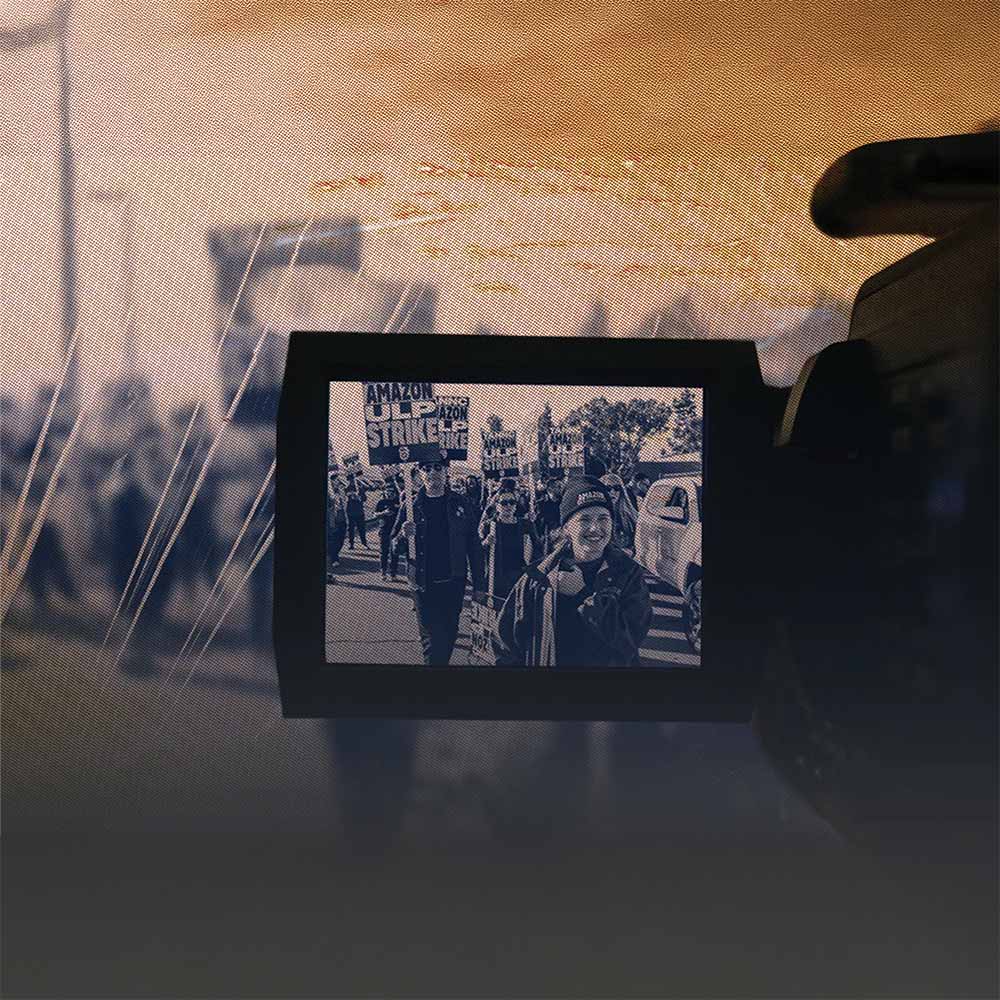
Coverage of Amazon’s labor battles is a prime example of missing the forest for the trees. Reporting framed as a play-by-play of the company’s court appearances and legal filings misses the point entirely. Amazon is worth trillions of dollars while its workers struggle to get by. Amazon is violating the law, refusing to bargain, and trying to break workers.
But these same workers are courageously fighting back. And that is the story that matters — the momentum on the ground.
Telling that story requires reporters to spend actual time on picket lines and at workplaces. The public would be shocked to find out how often reporters covering companies like Amazon do not even attend Amazon Teamsters rallies or actions in their own cities.
To be clear, there are still excellent journalists who want to tell these stories. But editors and executives work inside corporate structures with their own pressures and priorities.
American media outlets are owned by a handful of major corporations, hedge funds, and billionaires. In 2025, just six massive conglomerates controlled most of the U.S. media landscape. The Washington Post is owned by billionaire Amazon founder Jeff Bezos. Rupert Murdoch owns both The Wall Street Journal and the New York Post. The Los Angeles Times is owned by a biotech billionaire. The list goes on and on.
When major news outlets are controlled by many of the billionaires who spend tens of millions to union bust in their own companies, it without a doubt shapes coverage.
In 2024, most labor coverage became inseparable from reporting about the presidential race. The populist shift on the Right was met with skepticism, while the alignment with mega-corporations on the Left went largely unexamined. There was little sustained scrutiny of the corporate interests influencing both parties.
In yet another loss, Politico recently announced it was ending its daily employment newsletter after 12 years, folding labor coverage into broader economic and regulatory reporting.
Meanwhile, journalists with McClatchy papers like the Miami Herald and Sacramento Bee protested the use of AI-generated bylines at the hedge fund-owned chain. At least those reporters still have jobs worth defending.
In February, the Washington Post gutted a third of its newsroom. Not long after, the Post’s Editorial Board got into full gear, using the paper’s Opinion section as a homepage for their obsession: repeatedly making the case for billionaires — without mentioning their billionaire owner, Bezos — while publishing vehemently anti-worker, anti-union commentary on a weekly basis.
There is an old saying in journalism: “If it bleeds, it leads.” Corporatized news is not just bleeding. It is already using its own AI tools to draft its eulogy.
Far from ushering in greater democracy, this dying business model is turning once-venerated media institutions into propaganda pulpits for corporate strongmen while growingly increasingly disconnected from the lives of working Americans.
As the mainstream media loses public trust, along with advertising revenue and subscribers, the only thing that may save it is a divine rebirth in the public interest.