The Convenience Economy Is Built on Inconvenient Truths
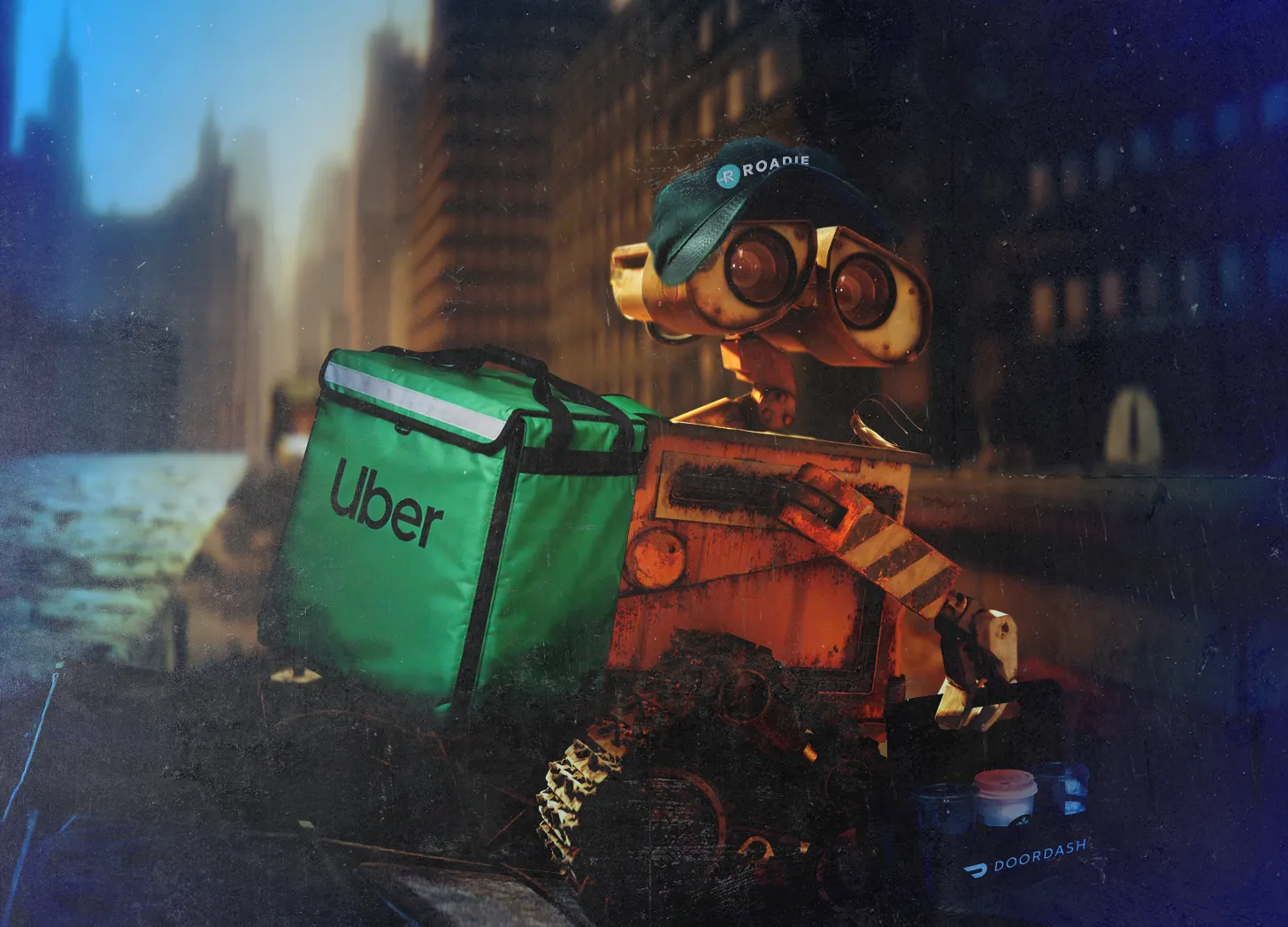
If you’ve seen WALL-E, Pixar’s Oscar-winning film from 2008, you remember the premise: an abandoned Earth buried in trash, a single mega-corporation running life from a spaceship above, and fat/lazy/unemployed humans drifting on autopilot while robots do all the work.
It was supposed to be an exaggerated allegory. Nearly 20 years later, it feels like the not-so-distant future.
Because if you look beyond the animation and love story, WALL-E isn’t really about a robot. It’s about work — what happens when it disappears, who controls it, and what’s left behind when corporations decide people are no longer necessary.
In the movie, the fictional mega-corporation, Buy N Large, doesn’t just sell products. It runs production, distribution, even government. Everything collapses into one system built on consumption and convenience. Humans don’t need to work anymore. And that’s the underlying problem that anchors the film. People have lost all agency and purpose. They become completely dependent on a system they don’t control.
Meanwhile, back on Earth, there’s still only one worker left: WALL-E.
He’s the last laborer, stuck doing an endless, thankless job rummaging through the wreckage of a society built on overconsumption and corporate neglect. It’s a sad, lonely routine. The work never ends. The people responsible are long gone. WALL-E is essentially a janitor, tasked with cleaning up centuries of human excess.
The modern convenience economy runs on the same promise WALL-E warned about: push a button, get whatever you want instantly. Packages and groceries show up at your door in hours. Everything feels frictionless and invisible. At least for the customer.
Just like in WALL-E, that seamless e-commerce experience is built on a system most people never see. Companies like Amazon, Uber, Target, Wal-Mart, and even UPS and DHL have spent years building a logistics and delivery model around the same idea: remove all the “hassle” for the consumer by pushing pressure onto the worker — and call it “flexibility.”
In theory, it sounds like a utopia. In practice, it looks a lot like WALL-E’s world. And what once felt futuristic is quickly becoming the new normal.
The pandemic didn’t create this model, but it poured gasoline on it. What might have taken a decade to normalize happened in a matter of months, and the pressure never eased.
Overnight, millions of people became dependent on delivery for everything from groceries to medicine. Companies scaled at breakneck speed, locking in consumer expectations for instant access while quietly intensifying the demands placed on workers. Routes got computerized, jobs got automated, corporate accountability got looser, and worker surveillance got tighter.
In the new gig economy, the risks are put on the worker while the profits remain concentrated at the top. Workers today can be terminated by an app notification. Routes expand while pay stagnates. AI algorithms increasingly dictate schedules and performance. In too many workplaces, technology is being used to monitor, discipline, and even replace workers altogether.
One of the most important lines in the American workplace used to be between employer and employee. It defined who had responsibility and who didn’t. That line is disappearing. In its place is something closer to what WALL-E imagined: a sprawling system where responsibility gets pushed downward and outward until it’s almost impossible to pin.
Look no further than last-mile delivery to see this new normal at work. Major corporations rely on layers of contractors, subcontractors, and “partners” to move goods that still carry their logo. This structure creates distance, both legally and morally, and when something goes wrong that distance becomes paramount.
If a driver gets injured, if wages are cut, if safety is ignored — the company at the top can point and shift blame further down the chain. The worker is always the last stop in the chain, and the first to get screwed when things go wrong.
But a worker who can’t negotiate pay isn’t an entrepreneur. A workforce that’s split into a thousand separate pieces has no control. And surely any job that can be deactivated by an algorithm isn’t independent. That’s the tradeoff at the center of the convenience economy.
What feels effortless on one end requires pressure somewhere else. Faster delivery means tighter timelines. Tighter timelines mean more strain on the people doing the work. Every minute shaved off a delivery window has to come from somewhere, and it almost always comes from the worker.
That’s the part no one sees. And when something goes wrong, that distance becomes the point. In WALL-E, the system runs so quietly and smoothly that people forget they’re even part of it. Until something breaks. Because convenience always comes at a cost. The difference now is that more workers are deciding they’re done paying it.
WALL-E is the most pro-union movie Pixar accidentally made. Its world is what unregulated automation plus monopoly capital produces. It’s a world where humans have no purpose and no power.
As workers, the ability to withhold our labor is one of our only tools to improve our lives. What happens when that disappears to AI? It’s a real existential issue. At the same time, you can’t watch that movie and not root for the little robot that desperately needs a union contract.
Originally published by Just Cause Teamsters. Read the original article here:
https://justcauseteamsters.substack.com/p/teamsters-review-wall-e-two-decades